
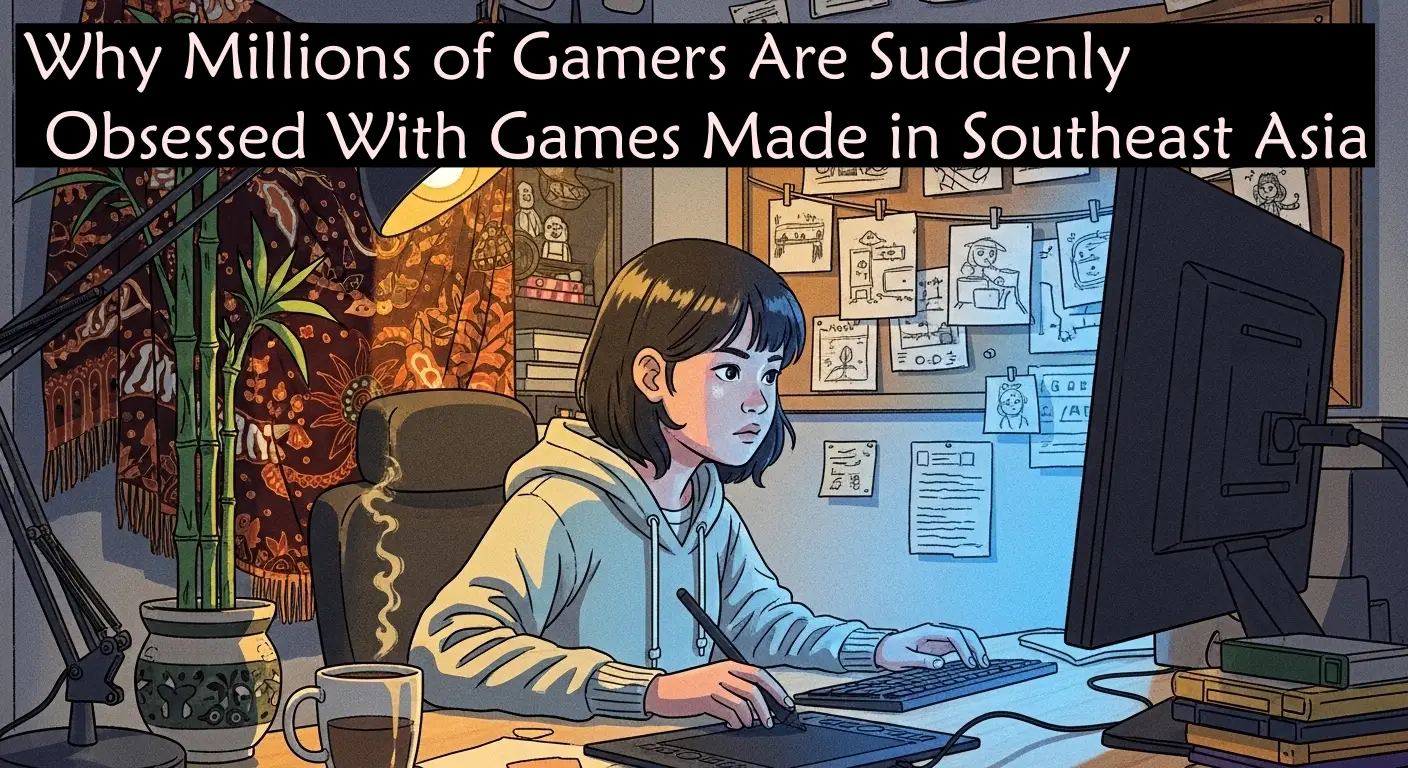
For years, the video game world told a familiar story: blockbusters from America, Japan, and Europe dominated the shelves, the charts, and the conversation. But something shifted recently — quietly at first, then all at once — and the people paying close attention are calling it one of the most exciting developments in modern gaming.
The East is coming to Steam, and it’s bringing ninjas, Zodiac spirits, café storytelling, and kung-fu roguelikes with it.
A Showcase That Changed the Conversation
The Eastern Game Fest, an online showcase promoting Eastern-themed gaming experiences to global audiences, officially launched across both Steam China and Steam’s international platform in April 2025. It welcomed titles steeped in Asian cultural identity — samurai epics, cultivation fantasies, martial hero adventures — and placed them directly in front of Steam’s hundreds of millions of registered users.
The reception was telling. Players who had spent years cycling through the same Western fantasy tropes found something genuinely different: stories rooted in philosophies they hadn’t encountered before, aesthetics that felt bold and unfamiliar, and gameplay systems that challenged assumptions about how a game should feel.
But the Eastern Game Fest was only part of the story.
Southeast Asia Gets Its Global Moment
Perhaps the more emotionally charged chapter came in June 2025, when the Southeast Asian Games Showcase made its debut on the world stage as part of Summer Game Fest — one of gaming’s most-watched annual events.
“This is the first year we’ve been able to broadcast the Southeast Asian Games Showcase at a global level,” said Nissie Arcega, co-founder of the initiative. “It’s an honor to be representing such a talented region and to really demonstrate what Southeast Asia can add to the wider games ecosystem.” Pixelkin
Those words carried weight. For developers who had spent years building games in relative obscurity — in Jakarta apartments, Kuala Lumpur studios, and Manila co-working spaces — this was a genuine arrival on the world stage.
The first-ever Southeast Asian Games Showcase featured over 40 games, including new trailers, demo announcements, and exclusive reveals. Explosion Network Titles like Coffee Talk Tokyo, Coral Island, and No Straight Roads 2 — a sequel announced as the show’s climactic finale — demonstrated the creative range of a region that had long been underestimated.
One standout entry was 13Z: The Zodiac Trials, selected as one of 40 games from over 300 submissions across Southeast Asia — a hack-and-slash roguelike drawing from Eastern mythology, where players battle demons and Zodiac Guardians to claim a place among the guardians themselves.
The Human Story Behind the Games
What makes this movement more than a market trend is the human reality behind it. These are developers who grew up consuming Western games, often feeling like outsiders to an industry that rarely reflected their cultures or stories. Now, through platforms like Steam and international showcases, they’re reclaiming that narrative.
A developer from Singapore building a game about Chinese spirit mythology. A team in the Philippines telling a café story about grief and connection. A Malaysian studio turning their childhood folktales into action games with global appeal. These aren’t just products — they’re personal.
The Eastern Game Fest explicitly welcomed games featuring themes like ninjas, samurais, martial arts heroes, kung fu, and cultivation — recognizing an entire cultural tradition that mainstream gaming had largely left untouched.
What Steam’s Platform Is Making Possible
The role of Steam in all of this cannot be overstated. Unlike the console market — where publishing deals, physical distribution, and platform holder approval once created enormous barriers — Steam’s relatively open ecosystem has allowed small Eastern studios to publish internationally without needing a corporate gatekeeper’s permission.
Steam runs multiple themed sale events and fests throughout the year, spotlighting particular categories of games with corresponding promotional support directly on the platform’s homepage. Steamworks For a small developer in Southeast Asia, that kind of visibility was previously unimaginable.
Xbox also stepped in as a sponsor of the Southeast Asian Games Showcase, with Microsoft expressing its commitment to supporting SEA-developed games through programmes like ID@Xbox and the Developer Acceleration Program. X The institutional recognition matters — it signals to the industry that this isn’t a curiosity, it’s a market.
What Comes Next
The Eastern gaming surge on Steam isn’t a moment. It’s a movement, and the momentum is only building. More regional showcases are being planned. More developers are finding international audiences. And more players around the world — tired of the same familiar formulas — are discovering that some of the most inventive, soulful games of the decade are being built in cities that gaming press rarely visits.
The map of where great games come from is being redrawn. And the East, long patient, long creative, and long underestimated, is holding the pen.
#SteamEast #EasternGameFest #SEAGames #AsianIndie #IndieGames #SteamGaming #GameDev #AsianGameDev #SteamSale #EasternGaming #SummerGameFest #IndieGameDev #PCGaming #GamingCommunity #SEAGShowcase